





For many homebuyers, neighbourhood safety is one of the first factors considered when choosing where to live. In Calgary, this is easier to evaluate than in many cities thanks to publicly available crime data and consistent reporting tools. This level of transparency allows homebuyers to evaluate neighbourhood safety using real data rather than perception.
According to Statistics Canada’s 2024 crime data, Calgary’s Crime Severity Index (CSI) was 62.3, below the national average of 77.9. This places Calgary among the lower-crime major cities in Canada based on severity-weighted incidents.
This guide breaks down how neighbourhood safety is measured in Calgary, which communities report lower crime rates, and how to interpret the data when comparing areas.
How Is Neighbourhood Safety Measured in Calgary?
Neighbourhood safety is typically measured using crime rates relative to population, rather than total incident counts.
The Calgary Police Service Community Safety Dashboard allows users to compare communities based on incidents per 1,000 residents. This approach provides a more accurate comparison, especially between communities of different sizes. The dashboard is updated monthly and tracks multiple categories, including:
- Person crime
- Property crime
- Social disorder
- Drugs
- Weapons
Domestic-related incidents are reported only at the district and ward level to protect privacy.
Using per-capita rates helps avoid a common misconception: higher total incidents in a community do not necessarily indicate higher risk for individual residents.
Calgary Communities with Lower Crime Rates
Based on Calgary Police Service data, several communities consistently report lower incident rates per 1,000 residents compared to others.
Rather than identifying a single “safest” neighbourhood, it is more accurate to focus on communities that remain below the city average over time.
| Community | Quadrant | 2025 Crime Rate (per 1,000) | Notable Feature |
| Discovery Ridge | Southwest | 3 | Adjacent to Griffith Woods Park |
| Cougar Ridge | Southwest | 3 | Hillside residential community |
| Chaparral | Southeast | 5 | Established lake community |
| Edgemont | Northwest | 5 | Mature residential neighbourhood |
| Mahogany | Southeast | 6 | Large master-planned lake community |
| West Springs | Southwest | 6 | Family-oriented residential area |
| Cranston | Southeast | 6 | River-adjacent community |
| Nolan Hill | Northwest | 6 | Newer residential development |
| Aspen Woods | Southwest | 7 | Low-density residential |
| Silverado | Southwest | 7 | Established suburban community |
Communities such as Discovery Ridge, Chaparral, and Mahogany consistently report lower incident rates. Established areas such as Edgemont and West Springs also perform well, particularly where land use is primarily residential and through-traffic is limited.
What Contributes to Lower Crime Rates?
Crime data alone does not explain why some communities report fewer incidents. However, several patterns appear consistently across lower-rate neighbourhoods:
- Lower population density
- Primarily residential zoning
- Limited commercial activity
- Fewer major traffic corridors
- Strong community planning and amenities
These characteristics are common in both established suburban neighbourhoods and newer master-planned communities.
How Newer Communities Fit Into Calgary’s Crime Trends
Many of the same characteristics associated with lower crime rates, such as lower density, residential zoning, and limited through-traffic, are also present in newer Calgary communities. While these areas may not yet have long-term data trends, their planning approach often aligns with patterns seen in more established, lower-crime-rate neighbourhoods.
For example, communities in Calgary’s northwest, such as Ambleton and Glacier Ridge, are designed as primarily residential areas with planned schools, parks, and pathway systems. These master-planned layouts typically limit commercial concentration and traffic flow, which are factors often associated with lower incident rates.
In the southeast, Wolf Willow is another example of a newer community shaped by similar principles, with relatively low reported incident totals in recent Calgary Police Service data. Located along the Bow River and near Fish Creek Park, this community features connected pathways, green space, and a residential-focused design.
In southwest Calgary, newer and developing areas such as Vermilion Hill and CreekView reflect a similar planning approach, with residential-focused layouts that align with patterns seen in lower-rate communities across Calgary.
Choosing the Right Calgary Community with Shane Homes
Calgary offers a wide range of communities that report lower crime rates, particularly in areas with residential-focused planning, lower density, and limited through-traffic.
Established neighbourhoods such as Discovery Ridge, Chaparral, and Aspen Woods continue to perform well based on per-capita data. At the same time, newer communities across the northwest, southwest, and southeast, including Ambleton, Glacier Ridge, and Wolf Willow, are being developed with many of the same characteristics.
Shane Homes builds in thoughtfully planned Calgary communities that reflect many of the characteristics homebuyers often look for when evaluating neighbourhood safety, including strong residential design, desirable locations, and long-term livability. If you’re exploring where to build a new home, contact an Area Manager to learn more about current communities and find the right fit for your family.
Frequently Asked Questions
Does Shane Homes build in safe communities?
Yes, Shane Homes focuses on building in desirable Calgary communities with strong residential planning, and several of its communities report relatively low crime rates, according to Calgary Police Service data. Below are reported 2025 crime rates per 1,000 residents for select Shane Homes communities, based on this data:
- Ambleridge: 1
- Glacier Ridge: 25
- Wolf Willow: 28
- Belmont: 40
- Legacy: 86
How do Calgary’s crime rates compare to those of other Canadian cities?
According to Statistics Canada’s 2024 data, Calgary’s Crime Severity Index was 62.3, below the national average of 77.9. Calgary’s CSI was higher than Toronto’s 59.4, but lower than Vancouver’s 81.2. Calgary’s police-reported crime rate was 4,796 incidents per 100,000 residents in 2024, compared with the national rate of 5,672.
What quadrant of Calgary has the lowest crime rate?
Southwest Calgary includes several communities that frequently report lower per-capita crime rates, including Aspen Woods, West Springs, and Discovery Ridge. Southeast Calgary also performs well in many comparisons, with communities such as Chaparral and Mahogany often reporting rates below the city average, according to Calgary Police Service community-level data.






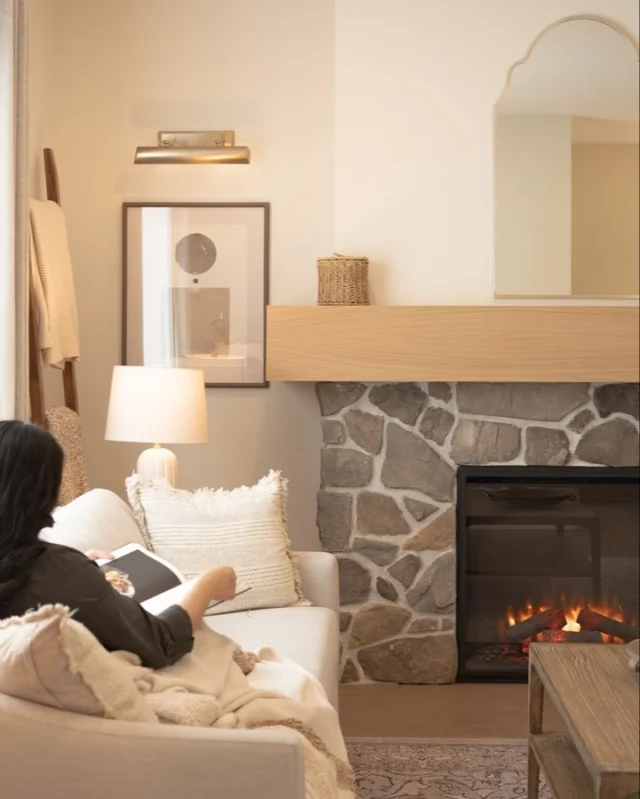


![We’re so excited to share our new Multi-Family project in Aspen Springs, Elowen!
This collection of unmistakable townhomes places you just moments away from the vibrant shops and dining of Aspen Landing, and just a short walk to parks and green spaces.
There are 5 distinct floorplans—the Cinder, Amber, Lark, Alder, and Terra, each which reflect a palette rooted in earth and element, balancing light and dark, warmth and depth, strength, and softness.
These homes include several stunning features, but our favourite has to be the rooftop patio!
If you’d like to register for early access and receive all of the updates about Elowen, check out our website [link in bio]
#calgary #calgaryhomes #luxuryhomes #yychomes #calgaryhomebuilder](https://www.shanehomes.com/wp-content/uploads/sb-instagram-feed-images/725750926_18601057177032008_6297857005210152619_nfull.webp)